



Here, the asset account – Furniture or Equipment – would be debited, while the Cash account would be credited. It is important to note that after the transaction, the debit amount is exactly equal to the credit amount, $5,000. Debits are typically located on the left side of a ledger, while credits are located on the right side. This is commonly illustrated using T-accounts, especially when teaching the concept in foundational-level accounting classes. However, T- accounts are also used by more experienced professionals as well, as it gives a visual depiction of the movement of figures from one account to another.
Teaching Students How to Write Amazing Double Entry Journals
To account for the credit purchase, a credit entry of $250,000 will be made to accounts payable. The debit entry increases the asset balance and the credit entry increases the notes payable liability balance by the same amount. If a business buys raw materials by paying cash, it will lead to an increase in inventory (asset) while reducing cash capital (another asset). Because there are two or more accounts affected by every transaction carried out by a company, the accounting system is referred to as double-entry accounting. The double-entry system of bookkeeping standardizes the accounting process and improves the accuracy of prepared financial statements, allowing for improved detection of errors.

Why Double-entry Journals?
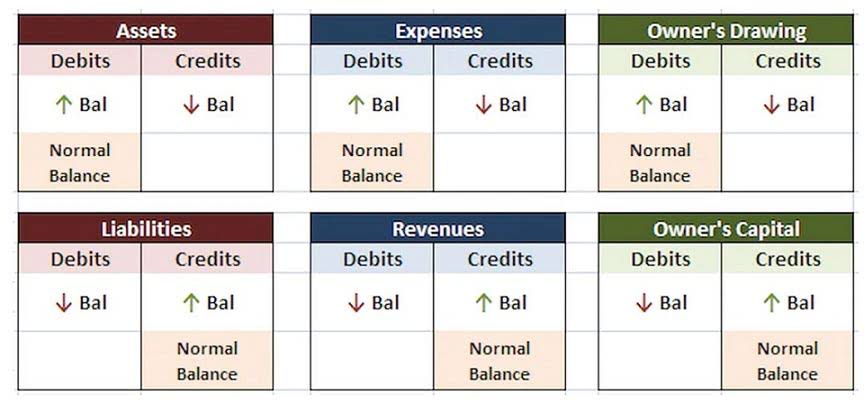
One of these entries is called a debit and the other is called a credit. If we didn’t make any further entry, we’d have to guess later on when petty cash we looked at our records. Now, we could just make a single entry and record that we received more cash. Looking to master financial modeling without months of study? The Financial Modeling 2-Days Bootcamp — covers forecasting, cost analysis, and dynamic financial modeling—ideal for analysts and finance professionals.
What to Write in A Double-entry Journal
And as I was writing that post, I realized, I need another post to address Teaching Students How to Write Double Entry Journals. To understand how double-entry bookkeeping works, let’s go over a simple example to solidify our understanding. Assume that Alpha Company buys $5,000 worth of furniture for its office and pays immediately in cash. In such a case, one of Alpha’s asset accounts needs to be increased by $5,000 – most likely Furniture or Equipment – while Cash would need to be decreased by $5,000. In single-entry accounting, when a business completes a transaction, it records that transaction in only one account. For example, if a business sells a good, the expenses of the good are recorded when it is purchased, and the revenue is recorded when the good is sold.

Journal Entry for Goods Returned
Different double-entry journals include journals for literature, vocabulary, text notes, and research. Double-entry journals for textbook notesUse a double-entry journal to make notes from a textbook, especially if you are squeamish about marking up your books. The physical interaction with the material helps focus you mentally as you read, and you will find that reviewing your journal notes is a more efficient way to study than trying to re-read the text. The early beginnings and development of accounting can be traced back to the ancient civilizations in Mesopotamia and is closely related to the development of writing, counting, and money. The concept of double-entry bookkeeping can date back to the Romans and early Medieval Middle Eastern civilizations, where simplified versions of the method can be found.

Teaching with this printout
This practice ensures that the accounting equation always remains balanced; that is, the left side value of the equation will always match the right side value. Dan graduated from the University of Oxford with a First class degree in mathematics. As well as teaching maths for over 8 years, Dan has marked a range of exams for Edexcel, tutored students and taught A Level Accounting. Dan has a keen interest in statistics and probability and their real-life applications. Twenty-Five Ways to Motivate Young Authors Inspiring students is the key to improving their writing skills.
- The student then prints this information out and writes (in pencil or pen) reactions to the first column’s information.
- Knowing which account to debit and which to credit is crucial.
- This activity can be a part of the teacher’s academic development plan and an entry to the student’s study planner.
- Generally, interest on capital is an appropriation of profit, which means in case of loss, no interest is to be provided.
- It stands out because of the language, the contrasts, the details, the characterization, etc. You can totally target this with the skills you are aiming for with the text.
- It requires two entries to be recorded when one transaction takes place.
- In academics, a double-entry journal or a dialectic journal is a kind of journal that is divided in two.
- Transactions that cannot be included in any of the above categories are recorded in the journal in the proper or general journal.
- The first column is for summary-oriented material such as key phrases, main ideas, important characters etc.
- Some questions come up when passages from your reading material just strike you at the right place.
- The DEAD rule is a simple mnemonic that helps us easily remember that we should always Debit Expenses, Assets, and Dividend accounts, respectively.
- If we are studying writing, we can keep track of these passages and name the literary device used in order to create a deeper understanding of their purpose.
The balance sheet is based on the double-entry accounting system where the total assets of a company are equal to the total liabilities and shareholder equity. Double-entry bookkeeping was developed in the mercantile period of Europe to help rationalize commercial transactions and make trade more efficient. It also helped merchants and bankers understand their costs and profits. Some thinkers have argued that double-entry accounting was a key calculative technology responsible for the birth of capitalism. A ledger is https://emmanuelaa.org/which-accountancy-firm-is-best-for-contractors/ a book of accounts that classifies and permanently records business transactions.
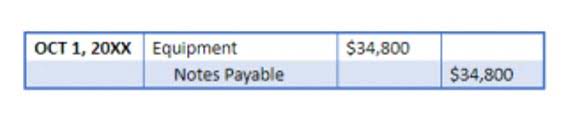
Below is an example of how a language arts teacher who is teaching Walden, by Henry David Thoreau, could use a double-entry double entry notes example journal. To overcome the barriers of transaction form and recording, the journal can be divided into the following categories. The best method of accounting in the current competitive world is the Double Entry System. The common way to apply a double-entry journal is with an in-person teaching format. Below are ways that this method can be modified to fit the other teaching formats.